HDPE plastic: Lightweight, flexible, and wear-resistant for outdoor and industrial use
High-Density Polyethylene (HDPE) is a rugged, versatile plastic used everywhere from industrial equipment to outdoor enclosures. It’s known for impact resistance, chemical stability, and a unique combination of stiffness and flexibility that makes it extremely durable in harsh environments. HDPE is commonly used for machine guards, outdoor components, structural panels, and parts that must absorb shock without cracking. It handles vibration, abrasion, and moisture better than most plastics, making it a favorite for manufacturers, engineers, and hobbyists building components that see real-world abuse. At SendCutSend, we CNC route USA-sourced HDPE in .250”, .375”, and .500” thicknesses to ±.005” tolerance, with optional tapping and countersinking for ready-to-assemble parts.
What are the key things to know about HDPE?
- Highly impact-resistant: absorbs shock and resists cracking.
- Great for outdoor use: UV-stable grades resist moisture and weathering.
- Chemically resistant: holds up to oils, greases, cleaners, and solvents.
- Slightly flexible: won’t shatter or break under stress.
- Excellent machinability: cuts smoothly with CNC routers.
These traits make HDPE one of the most forgiving, durable, and stable plastics available.
Why do fabricators choose HDPE for their projects?
Fabricators choose HDPE when they need a material that can take abuse, survive impact, shrug off chemicals, and remain reliable in outdoor or industrial environments. Unlike brittle plastics (such as acrylic) or rigid engineering materials (such as Delrin), HDPE offers a tough, flexible, user-friendly balance. Reasons HDPE is popular among fabricators:
- It’s nearly impossible to crack under normal use.
- It can be bent slightly without breaking.
- It holds up to constant vibration and impact.
- It can be routed and machined with clean edges.
- It is inexpensive compared to most engineering plastics.
- It performs extremely well outdoors or in wet environments.
HDPE works where other plastics fail — especially in harsh real-world conditions.
What are the advantages of using HDPE?
1. Exceptional impact resistance
HDPE can absorb heavy impacts without cracking or shattering. This makes it ideal for:
- Machine guards
- Automotive parts
- Protective covers
- Outdoor components
- Workholding fixtures
It’s one of the toughest plastics in terms of real-world durability.
2. Long-term weather and moisture resistance
HDPE will not rot, swell, or warp from water exposure. UV-stable grades (including those offered by SendCutSend) stand up well outdoors.
3. Great chemical resistance
HDPE resists:
- Oils
- Fuel
- Grease
- Solvents
- Cleaning chemicals
- Mild acids and bases
Perfect for industrial, lab, and shop environments.
4. Lightweight and slightly flexible
HDPE’s slight flex gives it shock-absorbing performance. It absorbs vibration, making it a stable choice for machine components or fixtures.
5. Excellent machinability
HDPE CNC routes cleanly with smooth, even edges. It does not crack or chip — a major advantage over more brittle plastics like acrylic.
What are the limitations or drawbacks of HDPE?
1. Low stiffness
HDPE is tough but not rigid. Long, thin features may flex more than expected. For stiff structural parts, consider:
2. Difficult to tap or thread for tight tolerances
Threads can strip under high load. For repeated fastening, consider:
- Threaded inserts
- Larger thread sizes
- Wider load-bearing surfaces
SendCutSend does offer tapping on HDPE, but torque should remain low.
3. Not suitable for high heat
HDPE softens around 180°F (82°C). Avoid using it:
- Near engines or motors
- In high-friction areas
- In hot enclosures
4. Poor bonding ability
HDPE does not glue well; adhesives rarely adhere reliably. Plan for mechanical fastening instead.
5. Visible tool marks on some finishes
While HDPE machines cleanly, thicker cuts may show faint witness marks on edges. Sanding can improve appearance if needed.
How does HDPE behave during CNC routing?
HDPE is one of the easiest plastics to route because it:
- Cuts cleanly
- Does not crack
- Does not chip
- Does not melt when cut with proper feeds/speeds
- Produces smooth, uniform edges
SendCutSend routes HDPE to ±.005” tolerance, giving you highly repeatable parts for everything from outdoor signage to industrial machine guards.
HDPE edge behavior after CNC routing
Expect:
- Smooth, semi-matte edges
- No brittleness
- Slight “fuzzing” on some edges (easily removed with a quick wipe or deburr)
Routing considerations for HDPE
HDPE is slightly flexible, so avoid:
- Thin internal “fingers”
- Very narrow walls
- Extremely small holes
The material behaves best when features are sized proportionally to thickness.
How should I design parts for HDPE?
HDPE is forgiving, but designing appropriately ensures strong, long-lasting parts.
Recommended design practices:
✔ Hole and slot design
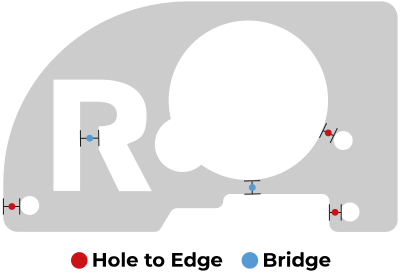
- Holes should be greater than or equal to material thickness.
- Keep holes at least 2× thickness from edges.
✔ Avoid thin unsupported geometries
- Use wider ribs for stability.
- Avoid long thin arms in .250”.
✔ Include fillets
Filleted inside corners reduce stress and improve cut quality.
✔ Mechanical fastening
Because HDPE doesn’t bond well with glue, design for:
- Screws
- Bolts
- Inserts
- Mechanical joints
✔ Add thickness for structural parts
If stiffness matters, choose .375″ or .500”. For more guidelines, see SendCutSend’s design guidelines
What secondary services are available for HDPE?
SendCutSend supports tapping and countersinking for HDPE parts.
Tapping
Useful for:
- Fixtures
- Enclosures
- Robotics frames
- Industrial assemblies
Important: HDPE threads are weaker than Delrin threads. Keep torque low and consider larger thread sizes.
Countersinking
Works well due to HDPE’s clean cutting behavior. Ideal for:
- Panels
- Covers
- Surface-flush fasteners
Where is HDPE most commonly used?
HDPE is used anywhere durability, chemical resistance, and outdoor reliability are more important than stiffness. Common applications include:
- Machine guards and industrial covers
- Outdoor signage and panels
- Jigs, fixtures, and tooling
- Marine and boating components
- Agricultural equipment
- Automotive shrouds and brackets
- Electrical housings (non-heat areas)
- Spacers, washers, and wear components
- Cutting boards or food-processing equipment (in approved grades)
If a part needs to survive abuse, HDPE is usually a top contender.
Are HDPE parts from SendCutSend made in the USA?
HDPE at SendCutSend is sourced from trusted U.S. suppliers, ensuring consistent sheet quality and predictable machining behavior. All fabrication of parts ordered through SendCutSend happens in our three U.S. facilities:
- Reno, Nevada
- Paris, Kentucky
- Arlington, Texas
This domestic workflow maintains tight tolerances, fast lead times, and reliable stock availability.
When should I use HDPE for my project?
Use HDPE when your design needs durability, flexibility, and chemical resistance, especially in outdoor or industrial environments where cracking or moisture could be a problem. HDPE is the right choice if your part will:
- Take impact
- Handle vibration
- Be exposed to weather
- Encounter oils or chemicals
- Flex slightly under load
It’s less rigid than Delrin but far tougher than acrylic, making it perfect for industrial covers, machine guards, and structural plastic parts that get handled or hit. SendCutSend CNC routes USA-sourced HDPE to ±.005” precision with optional tapping and countersinking, giving you ready-to-assemble components in just 2–4 days.