Viton FKM rubber: High temperature, chemical-resistant gasket material for extreme environments
Viton FKM is a premium fluoroelastomer rubber known for its exceptional chemical resistance, high temperature stability, and long term durability in harsh industrial environments. Engineers choose Viton when a gasket or rubber component must withstand aggressive chemicals, fuels, solvents, oils, and elevated temperatures that would break down standard elastomers like neoprene or Buna N.
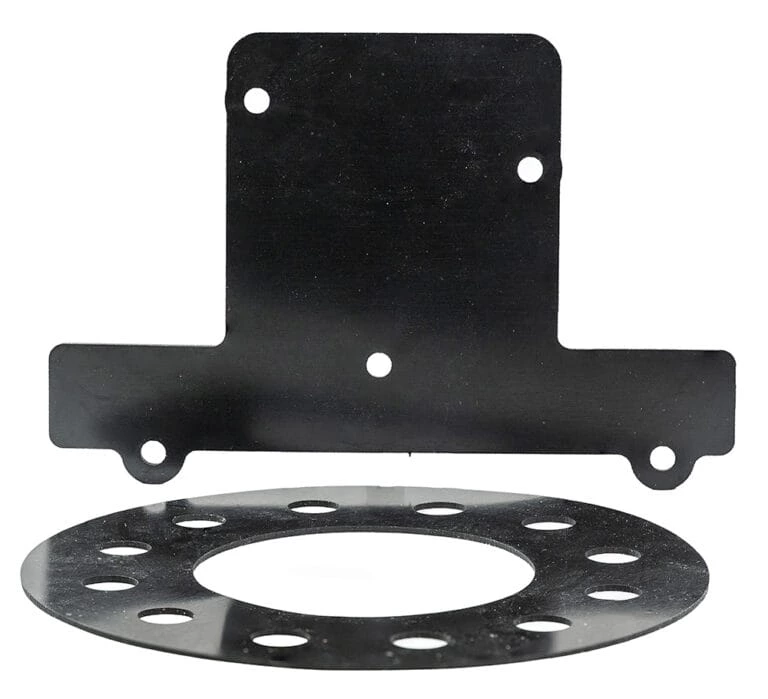
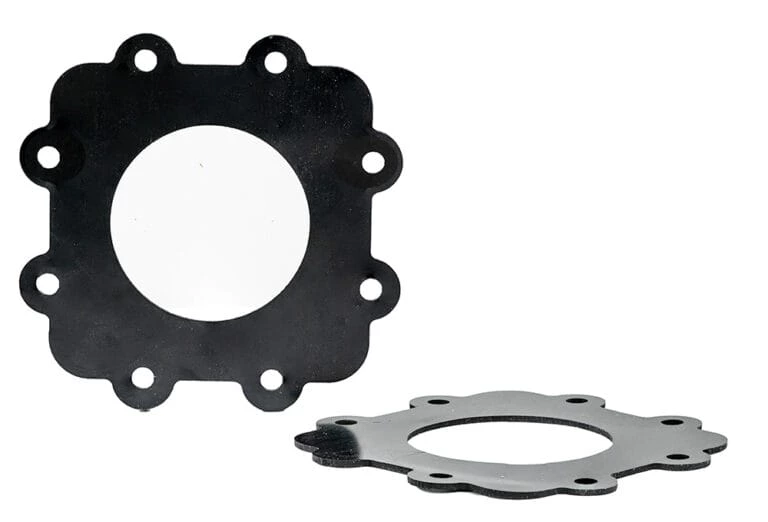
At SendCutSend, we waterjet cut .063 inch and .125 inch Viton FKM to ±.009 inch tolerance, producing precise gasket profiles suitable for high performance sealing in aerospace, automotive, chemical processing, energy production, and industrial systems.
What are the key things to know about Viton FKM rubber?
- Viton FKM has outstanding chemical resistance to fuels, oils, and aggressive solvents
- Viton FKM has high temperature stability, making it suitable for extreme environments
- Viton FKM has excellent compression sealing with long-term performance
- Viton FKM waterjet cuts cleanly, making it ideal for detailed gasket shapes
- Viton FKM is designed for demanding industrial, chemical, and automotive systems
Why do engineers choose Viton FKM for gaskets and seals?
Viton FKM is chosen because it offers a combination of heat resistance, chemical compatibility, and mechanical performance that far exceeds general purpose rubbers. Where neoprene, EPDM, or Buna N begin to degrade, Viton FKM remains stable and maintains its sealing ability.
Fabricators and engineers choose Viton FKM because:
- It handles fuels, oils, solvents, and aggressive industrial chemicals.
- It performs reliably at high temperatures.
- It maintains compression set and sealing pressure over time.
- It resists swelling, shrinking, and hardening.
- It withstands harsh operating environments where other rubbers fail.
This reliability makes Viton FKM a preferred choice for critical sealing applications where failure is unacceptable.
What chemicals is Viton FKM resistant to?
People often search for detailed compatibility because Viton FKM is known for exceptional chemical performance.
Viton FKM is resistant to:
- Fuels including gasoline and diesel
- Aviation fuels
- Automotive fluids and lubricants
- Petrochemicals
- Oils and hydraulic fluids
- Strong solvents
- Acids including many concentrated formulations
- Ozone and weather exposure
- Many industrial process chemicals
Its broad chemical resistance is one of the major reasons it is used in aerospace and chemical processing equipment.
Note that extremely strong caustics or high concentrations of ketones may require alternative materials like PTFE, but for most industrial fluids, Viton FKM is one of the best-performing elastomers.
How well does Viton FKM handle high temperatures?
High temperature resistance is one of the most distinctive advantages of Viton FKM. While many rubbers soften, crack, or break down when exposed to heat, Viton maintains elasticity and sealing performance.
Typical thermal performance includes:
- Continuous service in elevated temperatures
- Excellent resistance to thermal cycling
- Minimal hardening or compression loss over time
- Ability to withstand hot oils and solvents
This makes Viton a go-to material for engine compartments, aerospace equipment, chemical processing machinery, and industrial heating systems.
What are the advantages of using Viton FKM?
Exceptional chemical resistance
Viton FKM is one of the most chemically resistant elastomers available. It performs well in environments where standard rubbers quickly degrade.
High temperature durability
Viton maintains elasticity and sealing ability at elevated temperatures where neoprene and Buna N begin to fail.
Excellent compression sealing
It resists permanent deformation and maintains sealing pressure over time, even in demanding applications.
Long lifespan in extreme environments
Viton withstands:
- Fuel exposure
- High heat
- Harsh solvents
- Weather and ozone
- Industrial chemicals
Its durability makes it ideal for long term installations.
Waterjet compatibility
Waterjet cutting produces smooth, accurate Viton gaskets without heat-affected zones or burning.
What are the limitations or drawbacks of Viton FKM?
Higher cost than general purpose rubbers
Viton is a premium material and priced accordingly. It is not intended for low cost sealing where neoprene or Buna N would suffice.
Not ideal for extremely cold environments
At very low temperatures, Viton becomes less flexible. Materials like silicone or EPDM may be better choices for freezing conditions.
Not suitable for all chemicals
While highly resistant to most fuels and solvents, Viton can be degraded by certain ketones, amines, and hot water or steam depending on formulation.
Less stretchy than softer rubbers
Viton is firm and durable but does not stretch as easily as silicone or natural rubber.
Thick sections require more clamping force
In .125 inch thickness, Viton may require stronger bolt load to achieve full compression.
How does Viton FKM respond to waterjet cutting?
Waterjet cutting is the preferred process for Viton because it produces clean edges without thermal damage.
Fabricators can expect:
- Clean, uniform cut edges
- Excellent repeatability for complex geometry
- Smooth internal holes and bolt patterns
- No fraying or material delamination
- Tight, consistent part tolerances
- Reliable cut performance in both .063 and .125 inch thicknesses
Laser cutting is not used because Viton emits harmful fumes when burned. Waterjet cutting avoids all thermal effects and produces precise gasket shapes.
How should I design parts for Viton FKM?
Viton is strong and dimensionally stable, but it is still a flexible elastomer. Designing with appropriate tolerances ensures proper sealing performance.
Recommended design practices:
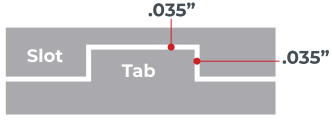
- Keep minimum feature sizes above .060 inch for .063 inch material
- Keep minimum feature sizes above .090 inch for .125 inch material
- Use rounded internal corners instead of sharp points
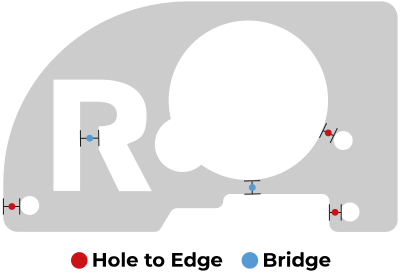
- Avoid extremely narrow bridges near bolt holes
- Plan for moderate to high clamping force depending on thickness
- Ensure bolt holes are positioned for uniform gasket compression
- Avoid press fits because Viton is firm and will not stretch significantly
Before uploading your file to SendCutSend, reference our Design Guidelines.
What are the most common uses for Viton FKM rubber?
Viton is widely used in industries that require extreme chemical resistance and thermal stability.
Common applications include:
- Fuel system gaskets and seals
- Chemical processing equipment
- Aerospace and aviation components
- Automotive engine compartment gaskets
- Oil field and petrochemical seals
- High pressure pumps and valves
- Industrial machinery with solvent exposure
- O-ring, washer, and flat gasket replacements
Viton is used whenever a sealing surface must remain stable in environments that would break down other rubbers.
How does Viton compare to neoprene and Buna N rubber?
This is one of the most common comparison searches, especially among engineers deciding between elastomers.
Compared to neoprene
- Viton has far superior chemical resistance
- Viton withstands higher temperatures
- Neoprene is better for general outdoor use but not for aggressive chemicals
- Neoprene is more flexible and easier to compress
- Viton lasts much longer in fuel and solvent environments
See more about neoprene.
Compared to Buna N (nitrile)
- Viton handles much more aggressive chemicals
- Viton tolerates significantly higher temperatures
- Buna N is better for cost sensitive projects
- Buna N is more flexible
- Viton is preferred for aerospace, automotive, and industrial chemical applications
Learn more about Buna N.
If a design requires extreme chemical and temperature performance, Viton is the correct choice. If the application is cost sensitive or does not involve harsh chemicals, neoprene or Buna N may be more suitable.
When should I use Viton FKM for my project?
Choose Viton FKM when your application demands a high temperature, chemically resistant, long lasting gasket material that will not degrade in aggressive or extreme environments.
Viton is the right choice if your part must:
- Seal against fuels, oils, solvents, or aggressive chemicals
- Perform in elevated temperatures
- Maintain compression set for long periods
- Withstand thermal cycling
- Provide high reliability in critical equipment
- Resist weathering, ozone, and oxidation
- Hold up in aerospace, automotive, or industrial systems
Viton is not ideal for:
- Low-budget sealing applications
- Very cold environments
- Designs that require stretch or high elasticity
SendCutSend waterjet cuts .063 inch and .125 inch Viton FKM with ±.009 inch precision, producing high performance gasket components ready for demanding engineering applications.