1095 high carbon steel: Why fabricators choose strength, sharpness, and durability
1095 high carbon steel is the alloy you turn to when you need maximum hardness and edge retention in a tough, no-nonsense material. Known for its strength, wear resistance, and ability to hold a fine edge, it’s commonly used for knives, tools, dies, and mechanical parts that experience constant friction or impact. At SendCutSend, we laser cut 1095 high carbon steel sheet in .125” and .187” thicknesses to ±.005” tolerance, ready for heat treatment, machining, or forming. This grade shines where shear strength, wear life, and sharpness matter most. Below we’ll break down what makes 1095 stand out, how it performs, and when it’s the right choice for your next fabrication project.
Key things to know about 1095 high carbon steel
- High carbon content: Contains roughly 0.95% carbon, giving it exceptional hardness and wear resistance after heat treatment.
- Not stainless: 1095 must be protected from moisture and oxidation — it rusts if left uncoated.
- Excellent edge retention: Ideal for cutting tools, blades, dies, and scrapers that need to stay sharp under stress.
- Heat-treatable: Can be hardened or tempered to adjust performance between toughness and brittleness.
- Magnetic and conductive: Behaves like typical carbon steels in magnetic applications.
- Laser-cut precision: SendCutSend cuts 1095 to ±.005”, with most orders shipping in 2–4 days.
- Finish options: Arrives raw and uncoated, ready for surface treatment or coating.
Mechanical and physical properties
1095 high carbon steel is a simple, high-carbon composition that prioritizes strength and hardness over ductility. When hardened and tempered properly, it performs like a tool steel, providing exceptional wear life and mechanical reliability.
-
- Density: 0.283 lb/in³
- Tensile strength (annealed): ~80,000 psi, in its soft state before heat treatment
- Tensile strength (hardened): 200,000–225,000 psi, varies based on quench and temper
- Yield strength: ~180,000 psi, very strong, but less ductile
- Elongation: ~10% annealed, low ductility compared to mild steels
1095 offers the hardness of a tool steel with the affordability of a plain carbon alloy, a go-to when durability outweighs corrosion concerns.
Why fabricators choose 1095 high carbon steel
Fabricators and engineers choose 1095 for one main reason: it holds up under pressure. Whether that means resisting wear, maintaining a sharp edge, or withstanding heavy loads, 1095 provides consistency and longevity that softer steels can’t match.
- Blades and dies: The high carbon content allows deep hardening, which keeps tools sharper for longer.
- Springs and fasteners: When heat-treated correctly, it combines stiffness and toughness in thin sections.
- Wear plates and machine parts: Excellent resistance to abrasion and deformation over time.
If your design involves mechanical movement, sliding contact, or high friction, 1095 is built for it.
Strengths and advantages
- Superior hardness and edge retention When heat treated, 1095 achieves hardness up to Rockwell C65 — far exceeding most carbon steels and many stainless grades.
- Excellent wear and abrasion resistance Perfect for cutting, scraping, or high-friction parts where material longevity is critical.
- High tensile and yield strength Handles high static or dynamic loads with minimal deflection or deformation.
- Simple, predictable heat treatment Straightforward to harden and temper using standard quench and tempering methods.
- Cost-effective compared to tool steels Offers tool-steel performance at a fraction of the cost, especially for small production runs.
- Machinable in the annealed state Easy to drill, cut, or mill before heat treatment, then hardened afterward for final strength.
Trade-offs and limitations
- Low corrosion resistance 1095 rusts easily when exposed to humidity or moisture. Always apply oil, paint, or a surface finish. For corrosion-resistant alternatives, see 304 stainless steel.
- Limited ductility It’s strong but not forgiving — sharp bends or forming will cause cracking, especially after heat treatment.
- Requires heat treatment for full performance In its annealed form, it’s soft and easy to machine but lacks wear resistance until hardened.
- Not weldable Welding 1095 creates brittle heat-affected zones. Mechanical fastening or riveting is recommended.
- Surface oxidation during laser cutting The high carbon content can cause light discoloration along cut edges. This is normal and can be sanded or polished off before finishing.
Fabrication and laser cutting considerations
Laser cutting performance
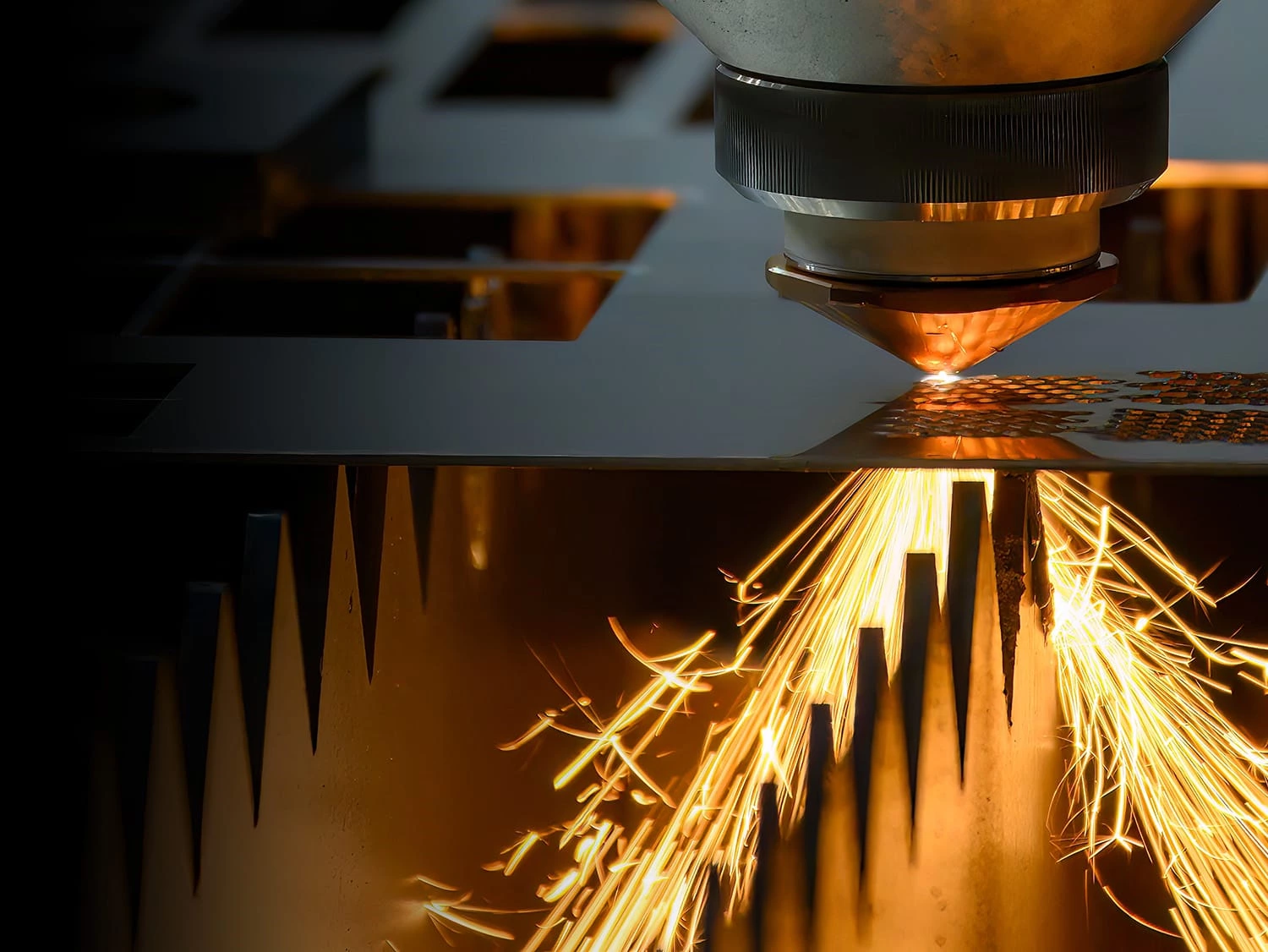
SendCutSend laser cuts 1095 high carbon steel to ±.005” tolerance. The material’s density and reflectivity require optimized power settings, producing clean edges with minimal burr or heat distortion.
- Thin sheets (.125”) cut with sharp, defined edges.
- Thicker sheets (.187”) may show light oxidation or edge darkening, easily removed by sanding.
- Because of the high carbon content, laser cutting does not alter hardness significantly — ideal for post-cut heat treatment.
Design guidelines for 1095 High Carbon Steel
For best manufacturability:
- Avoid internal corners sharper than 0.03″.
- Keep holes ≥ material thickness in diameter.
- Maintain 1.5–2× thickness clearance between holes and edges.
- Design for mechanical joining rather than welding.
Check SendCutSend’s design guidelines for more tips.
Surface prep and finishing
1095 comes raw, so finishing depends on your end use:
- Oil coating: Simple, traditional rust prevention for tool and blade blanks.
- Black oxide or phosphate coating: Improves corrosion resistance and appearance.
- Powder coating or paint: For non-heat-treated applications only — heat exposure can affect hardness.
- Polishing or grinding: Achieves a mirror finish when properly hardened.
Use cases and applications
Because of its high hardness, edge retention, and wear resistance, 1095 is used in:
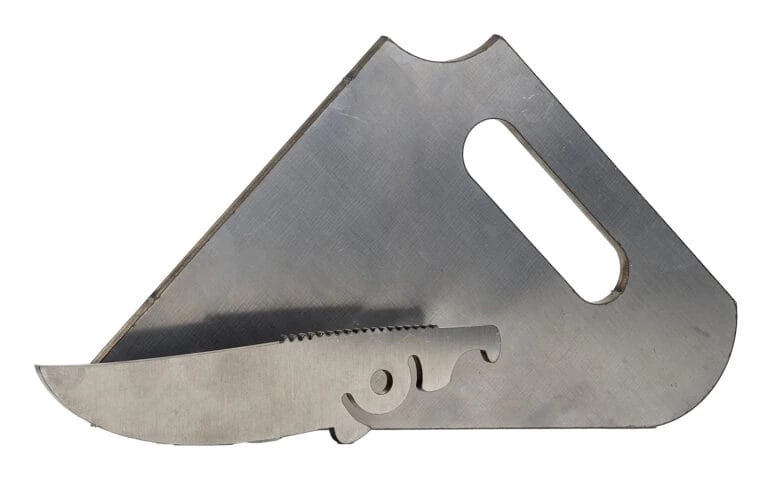
- Knife blanks and blades
- Cutting tools and dies
- Industrial wear plates and scrapers
- Machine components under friction load
- Punches, chisels, and hand tools
- Springs or clips (when heat treated accordingly)
If your design calls for durability, sharpness, and consistent mechanical performance, 1095 delivers where softer steels fail.
When to use 1095 high carbon steel
Choose 1095 high carbon steel when you need strength and edge performance above all else. It’s ideal for tools, blades, and industrial parts that must resist wear and maintain precision under stress. It’s not as formable as mild steel or as corrosion-resistant as stainless, but for maximum hardness, wear life, and mechanical reliability, it’s the go-to material. At SendCutSend, we laser cut 1095 high carbon steel sheets in .125” and .187” thicknesses to ±.005” tolerance, with 2–4 day lead times. Whether you’re prototyping a custom blade, tool, or mechanical part, 1095 provides the dependable strength that keeps your designs performing longer.